
IDIKSA is an individualized digital indicator of knowledge, of skills and abilities, which should become a generally accepted and directing tool in a world based on the integration of physical and virtual spaces.

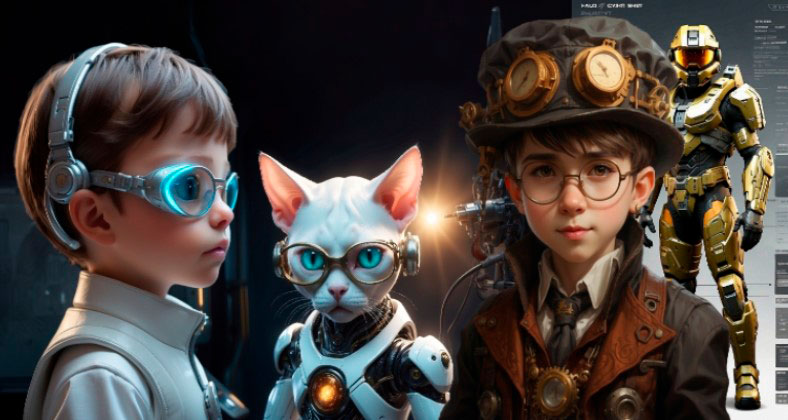
In this article, we will explore the tech revolution that is the convergence of Artificial Intelligence and Robotics. This seamless human-machine collaboration allows for new possibilities in various fields. We will discuss the impact of this collaboration on daily life and industry. Join us as we dive into the exciting world of collaborative intelligence.
Artificial Intelligence (AI) refers to the ability of machines to perform cognitive tasks that typically require human intelligence, such as learning, problem-solving, and decision-making. Robotics, on the other hand, is the branch of technology that deals with the design, construction, and operation of robots.
When AI and Robotics combine forces, it creates a new frontier of collaborative intelligence, enabling machines to work alongside humans seamlessly. Robotics serves as the physical manifestation of AI, making it possible for machines to interact with their environment, while AI provides the brains that power intelligent decision-making.
As we delve deeper into the intricacies of AI and Robotics, it becomes clear that their collaboration is paramount to unlocking their full potential. By understanding the synergistic relationship between these two technologies, we can appreciate the importance of working towards a future where humans and machines can work together harmoniously to overcome complex problems and drive innovation.
Artificial Intelligence and Robotics have a rich and fascinating history, with both fields equipped with their own origins, timelines, and milestones. By tracing their development, we can understand the significant contributions these fields have made leading up to the era of collaborative intelligence.
AI can be traced back to the 1950s, where John McCarthy coined the term “Artificial Intelligence” and introduced the concept of machine learning. The introduction of the first neural network by Frank Rosenblatt in 1958 marked a significant milestone in the development of AI.
As for Robotics, the first ever robot, known as the Unimate, was introduced in 1962 and was used for industrial tasks. Since then, the field has grown substantially and expanded beyond the industrial sector to include fields such as healthcare and education.
Year Event
1969 The first version of the AI Magazine was published
1985 The Backpropagation algorithm was introduced for training neural networks
1997 IBM’s Deep Blue defeated chess grandmaster Garry Kasparov
2005 Stanley, an autonomous car, won the DARPA Grand Challenge
2015 Google’s AlphaGo defeated champion player Lee Sedol in the game of Go
2017 SoftBank introduced Pepper, the world’s first personal robot capable of reading emotions
From chatbots to autonomous cars, AI and Robotics have come a long way since their inception. In the next section, we will explore how these fields are already making their mark in our daily lives.
Artificial Intelligence and Robotics are no longer science fiction concepts. They have already found their way into our daily lives, shaping the way we learn, work, and interact with the world. Let’s take a closer look at some practical applications of these technologies:
| Technology | Industry/sector |
| Smart speakers (e.g., Amazon Echo, Google Home) | Home automation, entertainment |
| Virtual personal assistants (e.g., Siri, Alexa) | Productivity, communication |
| Self-driving cars | Transportation, logistics |
| Industrial robots | Manufacturing, healthcare |
| Exoskeletons | Healthcare, military |
These are just a few examples of how AI and Robotics are already enhancing various industries and sectors. As the technology develops, we can expect to see even more widespread adoption and integration into various aspects of our lives. Stay tuned!
As we have seen, Machine Learning has played a critical role in advancing Artificial Intelligence and Robotics, enabling collaborative intelligence to take shape. In recent years, there have been remarkable advancements in Machine Learning, allowing for even more sophisticated applications of AI and Robotics.
One of the most significant developments in Machine Learning is the rise of Deep Learning, a subset of Machine Learning that uses complex neural networks to simulate and enhance human-like thinking, perception, and decision-making. Deep Learning allows machines to learn and improve from experience, enabling them to perform complex functions such as image recognition, natural language processing, and speech recognition with high accuracy and speed.
Neural Networks are a crucial component of Machine Learning, allowing for the creation of deep learning models. Neural Networks are modeled after the structure and function of the human brain, consisting of layers of interconnected nodes that process and transmit information. The development of neural networks has enabled machines to recognize patterns and make predictions based on massive amounts of data.
| Advancements in Machine Learning | Applications |
| Reinforcement Learning | Autonomous systems, Robotics, Gaming |
| Generative Models | Image and video restoration, language generation, AI creativity |
| Federated Learning | Data privacy, Decentralized learning |
The future of Machine Learning holds immense potential, with many exciting developments on the horizon. The integration of Machine Learning with other technologies such as the Internet of Things (IoT) and 5G networks will enable even more collaborative intelligence applications, such as smart cities, autonomous vehicles, and personalized healthcare. As Machine Learning continues to evolve, we can expect to see it transform and enhance various industries and sectors in unprecedented ways.
The advancements in machine learning have given birth to new possibilities that were once only imagined in science fiction. The continuous development and progress being made in this field offer incredible potential for a better future that we cannot simply ignore
As we explore the rise of collaborative intelligence, we must understand the impact of Robotics and Automation on various industries. From manufacturing to healthcare to logistics and beyond, these technologies are transforming the way we work and conduct business.
Robotics and Automation are revolutionizing the manufacturing industry. With robots capable of performing repetitive and dangerous tasks, manufacturers can streamline processes, increase efficiency, and reduce costs. Additionally, they can ensure consistent quality while providing a safe work environment for human workers through collaborative efforts.
In healthcare, Automation enables the rapid processing of patient data and quicker response times in delivering care. Automation conducts the repetitive work, allowing doctors and nurses to have more time with patients, resulting in better health outcomes. This technology also plays a crucial role in drug discovery and development, making the process more efficient and effective.
In logistics, Automation is increasing efficiency and accuracy in the supply chain by handling repetitive tasks such as inventory management, packing, and shipping. These tasks, once performed manually, now occur much faster and error-free, with the result that humans can focus on tasks that demand their time, effort, and intellectual capabilities.
In conclusion, we see that Robotics and Automation are leading the way for a new era of collaborative intelligence. These technologies streamline processes, increase efficiency, and transform industries, enabling humans to focus on more creative tasks that require intellectual stimulation. The collaboration between artificial intelligence and humans will continue to drive innovation while elevating the human experience at work.
The Ethics of AI and Robotics
As AI and Robotics continue to revolutionize our world, questions surrounding their ethical implications must be addressed. Our reliance on technology brings forth challenges such as job displacement, privacy concerns, and algorithmic bias.
| Ethical Considerations | Impact |
| Privacy Concerns | The collection and use of personal data raises privacy concerns, and the need for regulations to ensure data protection is becoming increasingly apparent. |
| Job Displacement | The increasing use of automation in industries such as manufacturing, could result in job losses and wage stagnation for workers. Reskilling and retraining programs may be required to ensure no one is left behind. |
| Algorithmic Bias | The potential for AI to reinforce implicit biases in society, present a significant ethical concern. Efforts must be made to minimize the risk of discrimination from AI-powered systems. |
It is important to address these ethical considerations to ensure that AI and Robotics are used responsibly, and their benefits are shared equitably. Join us as we delve into the critical ethical discussions that accompany the rise of collaborative intelligence.

Collaborative intelligence thrives on the seamless interaction between humans and machines. The potential for human-machine collaboration is boundless, revolutionizing various fields and industries. Whether it’s in the form of robots working in tandem with humans on the factory floor or virtual assistants streamlining our daily tasks, the possibilities are endless.
Through human-machine collaboration, we can combine the unique strengths of humans and machines to drive innovation forward. While machines may be more efficient in processing data and executing repetitive tasks, humans bring invaluable skills such as creativity, empathy, and critical thinking. By working together, they create a powerful synergy that can tackle complex problems and produce breakthroughs that were once unimaginable.
| Field | Example of Human-Machine Collaboration |
| Healthcare | The development of AI-powered diagnostic tools that aid doctors in making accurate and timely diagnoses, improving patient outcomes. |
| Manufacturing | The use of collaborative robots or “cobots” that work safely alongside human workers to complete tasks such as assembly or packaging, improving speed and efficiency. |
| Education | The use of virtual assistants that can personalize learning experiences to a student’s unique needs, helping them achieve their academic goals. |
As these examples show, human-machine collaboration is already being utilized to great effect in various industries. With continued advancements in AI and Robotics, the potential for collaborative intelligence will only grow. The possibilities for innovation and problem-solving are truly limitless.
Exciting possibilities abound as we look ahead to the future of AI and Robotics. As these technologies continue to evolve, we can envision a world where humans and machines work together in seamless collaboration. From self-driving cars to smart homes, the impact on everyday life is set to be immense.
One area of remarkable progress is humanoid robots. These machines, which mimic human characteristics, could revolutionize the way we live and work. Imagine a world where robots perform tasks such as cooking, cleaning, and even caring for the elderly or sick. Advances are being made in areas such as artificial skin and advanced machine learning, bringing us ever closer to this exciting reality.
| Advancements | Potential Applications |
| Artificial skin | Robot-human interaction, prosthetic limbs |
| Advanced machine learning | Autonomous vehicles, healthcare, customer service |
Another area of great promise is AI-powered healthcare. From personalized treatment plans to intelligent diagnosis and monitoring, the potential benefits are immense. With AI already being used in areas such as drug discovery and bioinformatics, the future of medicine looks bright.
AI and Robotics are also set to transform the world of agriculture. The use of drones, smart sensors, and precision farming is already increasing yields and reducing waste. With the global population set to reach 9.7 billion by 2050, these technologies offer a promising solution to feeding a growing world.
– Get higher yields with precision farming using AI
– Time and cost savings through the use of drones and smart sensors As we anticipate the future of AI and Robotics, it is important to recognize the potential ethical considerations. As we further rely on machines to perform tasks and make decisions, it is crucial to ensure transparency, fairness, and accountability. We must work towards addressing these issues, while continuing to push the boundaries of technological advancement.
While the possibilities for collaborative intelligence are exciting, we cannot ignore the challenges and limitations that come with it. Technical limitations are one of the major hurdles we must overcome. As with any new technology, there are still some tasks that Artificial Intelligence and Robotics struggle to perform, hindering the growth of collaborative intelligence.
Another obstacle is regulatory frameworks. The integration of AI and Robotics into everyday life raises concerns around privacy, security, and accountability. Developing effective regulations and guidelines for these technologies is essential to ensure they are used safely and ethically.
Societal implications are also a challenge. The rise of AI and Robotics has led to concerns around job displacement and a widening skills gap. It is crucial to address these issues and ensure that the benefits of collaborative intelligence are felt by everyone.
By understanding these challenges and limitations, we can work towards addressing them and building a future where collaborative intelligence is responsible and beneficial to society.
These examples demonstrate the practical application of Industry 5.0 principles across diverse sectors. They highlight the potential of technology to empower individuals, aid in sustainable development, and drive economic growth.
Collaborative Intelligence is not just a theoretical concept but a tangible reality that is transforming numerous industries and sectors. In this section, we will explore some real-world examples of its applications, demonstrating the transformative power of Human-Machine Collaboration.
The aftermath of natural disasters requires quick and effective action to minimize damage and save lives. Collaborative Intelligence in action can ensure swift responses. For instance, drones equipped with sensors, cameras, and GPS can collect critical data about the disaster-stricken area, providing real-time information to relief teams. Robots can also be deployed for search and rescue operations, while AI-powered systems can analyze data for predicting future disasters.
Manufacturing is an industry where Robotics and Automation have already proven their value. Collaborative Intelligence takes it to the next level by combining the precision of machines with the creativity of humans. For example, BMW has implemented a human-robot collaboration system where robots handle repetitive tasks while humans take care of the complex ones. This has led to improved assembly line efficiency, increased productivity, and a safer working environment.
Collaborative Intelligence can also make a significant impact in the field of healthcare. AI-powered systems can analyze vast amounts of medical data, helping doctors make accurate diagnoses and personalized treatment plans. Robotics can assist in surgeries, providing exceptional precision and reducing the risk of errors. Meanwhile, wearable sensors and telemedicine platforms can enable remote monitoring and care, significantly improving accessibility and efficiency in the healthcare industry.
Virtual Assistants are becoming increasingly popular, thanks to their ability to use AI to understand and respond to human commands. Collaborative intelligence takes it a step further by allowing virtual assistants to be integrated with other technologies, such as smart homes and IoT devices. For instance, Amazon’s Alexa can now control various household appliances and devices, providing a seamless and personalized user experience.
In conclusion, these are just a few examples of how Collaborative Intelligence is shaping the world around us, enabling humans and machines to work together towards a better future. The possibilities are limitless, and the impact is just beginning to be realized. Join us as we continue to explore the exciting world of collaborative intelligence in action.
– Artificial Intelligence and Robotics are coming together to create a new era of collaborative intelligence.
– This seamless human-machine collaboration is reshaping our future and enabling innovative possibilities.
– We will explore the evolution of these technologies and how far they have come. Collaborative intelligence is already impacting various industries and sectors.
– Join us as we envision the future potential of collaborative intelligence and navigate the challenges it brings.
As we conclude our exploration of the rise of collaborative intelligence, we are left with an exciting vision of what the future holds. The convergence of Artificial Intelligence and Robotics marks a new era in which we can harness the power of human-machine collaboration to achieve unprecedented advances in various fields.
Although this technological revolution has its challenges and limitations, we believe that with responsible and ethical implementation, collaborative intelligence can unlock limitless possibilities. By embracing this future, we can work together to create a world where humans and machines work in harmony, driving innovation and bettering society.
Join us on this journey as we pave the way for a better future through collaborative intelligence.
Copyright 2022-2026 "IDIKSA" All Rights Reserved by IDIKSA LLP