
IDIKSA is an individualized digital indicator of knowledge, of skills and abilities, which should become a generally accepted and directing tool in a world based on the integration of physical and virtual spaces.


Space tourism, once a distant dream, is now becoming a reality. Several companies have emerged as key players in the race to offer extraterrestrial travel experiences. These visionary enterprises aim to provide individuals with the chance to witness the awe-inspiring beauty of space first-hand.
“Space exploration is no longer limited to highly trained astronauts and scientists. We believe that everyone should have the opportunity to experience the wonder and vastness of the universe.”
– John Fuller, CEO of Galactic Getaways
Entrepreneurial pioneers like Virgin Galactic, SpaceX, and Blue Origin have invested heavily in developing spacecraft that can transport paying customers to the edge of space and beyond. With cutting-edge technology and rigorous safety measures, the accessibility of space is expanding like never before.
Alongside space tourism, commercialization has also emerged as a driving force in the new era of space exploration. Companies are capitalizing on the potential economic opportunities that lie beyond our planet, from asteroid mining to satellite deployment.
Private enterprises have taken a central role in reducing the cost of space missions by developing reusable rockets and leveraging innovative business models. This shift towards commercial ventures provides funding for more ambitious space projects, ultimately accelerating scientific discoveries and technological breakthroughs.
The market potential for space tourism and commercialization is immense. According to industry forecasts, the global space industry’s value is projected to reach $1 trillion by 2040, driven primarily by private sector investments.
As a result of these investments, diverse markets are emerging, including the production and deployment of small satellites, spaceports, and even space-based manufacturing. We are witnessing the birth of a new space economy that promises to revolutionize industries on Earth and create opportunities beyond our imagination.
– Space technologies are advancing at an unprecedented rate, driving innovation in space exploration.
– Cosmic habitation is becoming a realistic and exciting prospect for the future.
– Advancements in rocket propulsion systems are improving the efficiency and affordability of space missions.
– Next-generation space telescopes and observatories allow us to gather unprecedented data from the farthest reaches of the universe.
– Robotics and automation are transforming our understanding of celestial bodies, expanding exploration capabilities.
In conclusion, the fields of space technologies and exploration are rapidly evolving, pushing the boundaries of human knowledge and capability. As we stand on the cusp of a new era in space exploration, we have witnessed remarkable advancements in various areas that are propelling us towards a future of cosmic habitation and planetary colonization.
Advancements in rocket propulsion systems, such as ion propulsion and reusable rockets, have revolutionized space travel, making it more efficient and cost-effective. These breakthroughs have paved the way for ambitious missions that were once only dreams.
Additionally, the development of next-generation space telescopes and observatories, like the renowned Hubble Space Telescope and the upcoming James Webb Space Telescope, has enabled us to peer deeper into the cosmos and unlock the mysteries of the universe.
From the utilization of robotics and automation in space exploration to the pursuit of lunar and Mars missions, humanity’s quest to unravel the secrets of celestial bodies has led to unprecedented discoveries. The future of space also holds promise for sustainable resource utilization and the rise of space tourism and commercial ventures.
So let us embark on this interstellar journey together, where human ingenuity, relentless exploration, and technological marvels intertwine to shape the destiny of space exploration. Join us as we continue to dare to dream and explore the vastness of the cosmos.
– Reduced reliance on Earth-bound resources
– Lowered costs of space exploration and colonization
– Extended mission capabilities and timeline
– Potential for scientific breakthroughs and technological advancements
– Enablement of space-based manufacturing and self-sufficiency The potential for extraterrestrial resource utilization is not limited to our immediate cosmic neighborhood. As we strive to reach Mars and other distant destinations, understanding and harnessing the resources available along our path become essential for sustaining humanity’s presence in the cosmos.
“By tapping into extraterrestrial resources, we open up avenues for resource independence and self-sustaining environments in space. This paves the way for a future where humanity can thrive beyond Earth, leveraging the resources of the universe to fuel our continued exploration and colonization efforts,” said Dr. Michael Chen, a leading expert in space resource utilization.
With each new mission and technological breakthrough, we inch closer to realizing the full potential of extraterrestrial resource utilization. As we continue our explorations and endeavors beyond Earth, let us embrace the vast possibilities that lie before us and navigate the stars with the knowledge that the resources of the cosmos are within our reach.
Spacesuits are essential protective gear for astronauts during spacewalks and planetary exploration. These advanced spacesuit technologies revolutionize astronaut safety and performance in the challenging conditions of the space environment. Let’s explore some of the latest innovations that enhance mobility, incorporate advanced life support systems, and integrate built-in sensors.
The latest spacesuit technologies prioritize enhanced mobility, allowing astronauts to move more freely and efficiently during spacewalks or surface exploration. These suits are designed with lightweight materials and flexible joints, enabling greater flexibility and range of motion. Improved mobility increases astronaut productivity and reduces fatigue, contributing to a more successful mission.
Spacesuits are equipped with advanced life support systems to ensure the astronaut’s safety and well-being during extravehicular activities. These systems provide a regulated supply of oxygen, remove carbon dioxide, and maintain optimal temperature and pressure levels inside the suit. Additionally, spacesuits incorporate water recovery systems, enabling the recycling of moisture from the astronaut’s breath and sweat.
The integration of built-in sensors in spacesuit technologies plays a crucial role in monitoring astronaut health and environmental conditions. These sensors can detect vital signs such as heart rate, body temperature, and oxygen levels, allowing ground control to monitor and address any potential health risks. Additionally, sensors provide real-time feedback on environmental factors like radiation levels and atmospheric composition, ensuring the safety of astronauts in hazardous conditions.
“The constant improvements in spacesuit technologies have greatly expanded our ability to explore the unknown and push the boundaries of human presence in space.” – Dr. Samantha Martinez, NASA Astronaut
The future of space exploration holds not only scientific advancements but also thrilling opportunities for space tourism and commercialization. As technology continues to evolve, private companies are making remarkable strides in opening up space travel to the public. Let’s embark on a journey through the cosmos of commercial space exploration.
Space tourism, once a distant dream, is now becoming a reality. Several companies have emerged as key players in the race to offer extraterrestrial travel experiences. These visionary enterprises aim to provide individuals with the chance to witness the awe-inspiring beauty of space first-hand.
“Space exploration is no longer limited to highly trained astronauts and scientists. We believe that everyone should have the opportunity to experience the wonder and vastness of the universe.”
– John Fuller, CEO of Galactic Getaways
Entrepreneurial pioneers like Virgin Galactic, SpaceX, and Blue Origin have invested heavily in developing spacecraft that can transport paying customers to the edge of space and beyond. With cutting-edge technology and rigorous safety measures, the accessibility of space is expanding like never before.
Alongside space tourism, commercialization has also emerged as a driving force in the new era of space exploration. Companies are capitalizing on the potential economic opportunities that lie beyond our planet, from asteroid mining to satellite deployment.
Private enterprises have taken a central role in reducing the cost of space missions by developing reusable rockets and leveraging innovative business models. This shift towards commercial ventures provides funding for more ambitious space projects, ultimately accelerating scientific discoveries and technological breakthroughs.
The market potential for space tourism and commercialization is immense. According to industry forecasts, the global space industry’s value is projected to reach $1 trillion by 2040, driven primarily by private sector investments.
As a result of these investments, diverse markets are emerging, including the production and deployment of small satellites, spaceports, and even space-based manufacturing. We are witnessing the birth of a new space economy that promises to revolutionize industries on Earth and create opportunities beyond our imagination.
– Space technologies are advancing at an unprecedented rate, driving innovation in space exploration.
– Cosmic habitation is becoming a realistic and exciting prospect for the future.
– Advancements in rocket propulsion systems are improving the efficiency and affordability of space missions.
– Next-generation space telescopes and observatories allow us to gather unprecedented data from the farthest reaches of the universe.
– Robotics and automation are transforming our understanding of celestial bodies, expanding exploration capabilities.
In conclusion, the fields of space technologies and exploration are rapidly evolving, pushing the boundaries of human knowledge and capability. As we stand on the cusp of a new era in space exploration, we have witnessed remarkable advancements in various areas that are propelling us towards a future of cosmic habitation and planetary colonization.
Advancements in rocket propulsion systems, such as ion propulsion and reusable rockets, have revolutionized space travel, making it more efficient and cost-effective. These breakthroughs have paved the way for ambitious missions that were once only dreams.
Additionally, the development of next-generation space telescopes and observatories, like the renowned Hubble Space Telescope and the upcoming James Webb Space Telescope, has enabled us to peer deeper into the cosmos and unlock the mysteries of the universe.
From the utilization of robotics and automation in space exploration to the pursuit of lunar and Mars missions, humanity’s quest to unravel the secrets of celestial bodies has led to unprecedented discoveries. The future of space also holds promise for sustainable resource utilization and the rise of space tourism and commercial ventures.
So let us embark on this interstellar journey together, where human ingenuity, relentless exploration, and technological marvels intertwine to shape the destiny of space exploration. Join us as we continue to dare to dream and explore the vastness of the cosmos.
Humanity’s fascination with the Moon and Mars has intensified, driving ambitious missions to explore and understand these celestial bodies on a deeper level. The ongoing pursuit of lunar exploration and Mars exploration has captured the imagination of scientists, engineers, and space enthusiasts around the world.
One of the most notable endeavors is the Artemis program initiated by NASA. It aims to land the first woman and the next man on the Moon by 2024, laying the groundwork for sustainable lunar exploration and eventually establishing a lunar outpost. This program will leverage advanced technologies and international collaborations to expand our understanding of Earth’s natural satellite.
Additionally, numerous Mars exploration missions have been conducted to uncover the mysteries of the Red Planet and pave the way for future human missions. Notably, the NASA Mars Exploration Program has seen remarkable successes with robotic rovers like Curiosity and Perseverance providing valuable insights into Martian geology, climate, and the potential for past habitability.
“Exploring the Moon and Mars not only satisfies our curiosity about other worlds, but also advances our understanding of our own planet and extends the horizon of human exploration. These missions reflect humanity’s aspiration to reach beyond our home planet and uncover the secrets of the cosmos.”
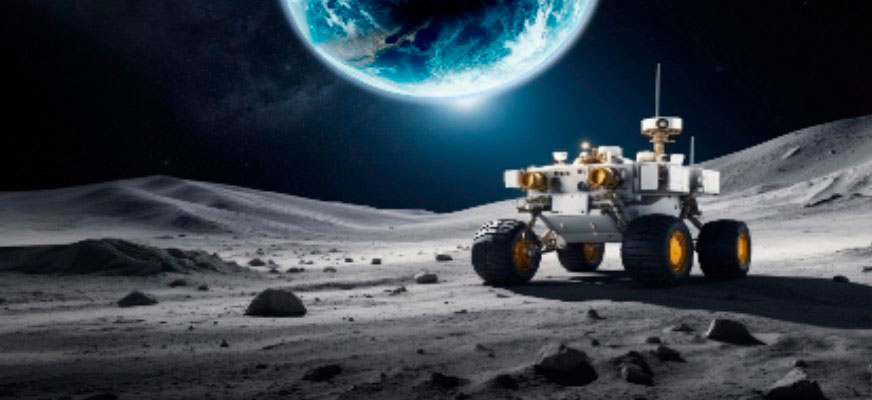
To facilitate lunar exploration and Mars exploration, scientists and engineers are developing cutting-edge technologies that address the unique challenges presented by these environments. Some key technologies being developed include:
– Advanced propulsion systems for efficient spacecraft travel
– Robotic missions and rovers for remote exploration and data collection
– Life support systems to sustain astronauts during long-duration missions
– In-situ resource utilization, utilizing local resources to support future missions
| Technology | Application |
| Ion Propulsion | Efficient spacecraft propulsion for long-duration missions |
| Autonomous Rovers | Remote exploration and data collection on planetary surfaces |
| Habitat Design | Creating livable environments for astronauts during extended missions |
| In-situ Resource Utilization |
Extracting and utilizing local resources for sustained exploration |
These technologies, along with ongoing research and development, will play a crucial role in realizing the vision of human presence on the Moon and Mars. As we continue to push the boundaries of space exploration, the knowledge gained from lunar and Mars missions will contribute to scientific advancements, technological innovations, and a broader understanding of our place in the universe.
As we venture farther into space, extraterrestrial resource utilization becomes crucial for sustainable exploration and colonization. Exciting advancements in extracting and utilizing resources from celestial bodies like asteroids and the Moon hold the potential to provide essential materials for future space missions and support the establishment of off-world settlements.
The utilization of extraterrestrial resources is a game-changer in space exploration. By reducing our dependence on Earth-bound resources, we can extend the duration and reach of missions while ensuring long-term sustainability. The abundance of raw materials found in space, such as metals, water, and even rare elements, presents opportunities for in-situ resource utilization (ISRU), where we harness and process these resources on-site to meet our needs.
“Extraterrestrial resource utilization is not just a matter of practicality; it’s a necessity for the future of space exploration. By tapping into the vast resources available beyond Earth, we unlock endless possibilities for scientific research, technological advancements, and even the potential for establishing permanent human settlements in space,” said Dr. Samantha Roth, a renowned space scientist. The Moon is a treasure trove of resources awaiting our discovery and utilization. Recent missions, such as NASA’s Artemis program, aim to establish a sustainable presence on the Moon and leverage its resources for future deep space exploration. The Moon’s regolith, the layer of loose soil and rocks covering its surface, contains valuable elements like oxygen, which can be extracted and used for life support systems or converted into rocket propellant.
Meanwhile, asteroids present another exciting opportunity for extraterrestrial resource utilization. These rocky bodies, rich in minerals and metals, can serve as mining targets. Companies like Planetary Resources and Deep Space Industries are already exploring the feasibility of extracting resources from asteroids, with visions of building a space economy based on asteroid mining.
– Reduced reliance on Earth-bound resources
– Lowered costs of space exploration and colonization
– Extended mission capabilities and timeline
– Potential for scientific breakthroughs and technological advancements
– Enablement of space-based manufacturing and self-sufficiency The potential for extraterrestrial resource utilization is not limited to our immediate cosmic neighborhood. As we strive to reach Mars and other distant destinations, understanding and harnessing the resources available along our path become essential for sustaining humanity’s presence in the cosmos.
“By tapping into extraterrestrial resources, we open up avenues for resource independence and self-sustaining environments in space. This paves the way for a future where humanity can thrive beyond Earth, leveraging the resources of the universe to fuel our continued exploration and colonization efforts,” said Dr. Michael Chen, a leading expert in space resource utilization.
With each new mission and technological breakthrough, we inch closer to realizing the full potential of extraterrestrial resource utilization. As we continue our explorations and endeavors beyond Earth, let us embrace the vast possibilities that lie before us and navigate the stars with the knowledge that the resources of the cosmos are within our reach.
Spacesuits are essential protective gear for astronauts during spacewalks and planetary exploration. These advanced spacesuit technologies revolutionize astronaut safety and performance in the challenging conditions of the space environment. Let’s explore some of the latest innovations that enhance mobility, incorporate advanced life support systems, and integrate built-in sensors.
The latest spacesuit technologies prioritize enhanced mobility, allowing astronauts to move more freely and efficiently during spacewalks or surface exploration. These suits are designed with lightweight materials and flexible joints, enabling greater flexibility and range of motion. Improved mobility increases astronaut productivity and reduces fatigue, contributing to a more successful mission.
Spacesuits are equipped with advanced life support systems to ensure the astronaut’s safety and well-being during extravehicular activities. These systems provide a regulated supply of oxygen, remove carbon dioxide, and maintain optimal temperature and pressure levels inside the suit. Additionally, spacesuits incorporate water recovery systems, enabling the recycling of moisture from the astronaut’s breath and sweat.
The integration of built-in sensors in spacesuit technologies plays a crucial role in monitoring astronaut health and environmental conditions. These sensors can detect vital signs such as heart rate, body temperature, and oxygen levels, allowing ground control to monitor and address any potential health risks. Additionally, sensors provide real-time feedback on environmental factors like radiation levels and atmospheric composition, ensuring the safety of astronauts in hazardous conditions.
“The constant improvements in spacesuit technologies have greatly expanded our ability to explore the unknown and push the boundaries of human presence in space.” – Dr. Samantha Martinez, NASA Astronaut
The future of space exploration holds not only scientific advancements but also thrilling opportunities for space tourism and commercialization. As technology continues to evolve, private companies are making remarkable strides in opening up space travel to the public. Let’s embark on a journey through the cosmos of commercial space exploration.
Space tourism, once a distant dream, is now becoming a reality. Several companies have emerged as key players in the race to offer extraterrestrial travel experiences. These visionary enterprises aim to provide individuals with the chance to witness the awe-inspiring beauty of space first-hand.
“Space exploration is no longer limited to highly trained astronauts and scientists. We believe that everyone should have the opportunity to experience the wonder and vastness of the universe.”
– John Fuller, CEO of Galactic Getaways
Entrepreneurial pioneers like Virgin Galactic, SpaceX, and Blue Origin have invested heavily in developing spacecraft that can transport paying customers to the edge of space and beyond. With cutting-edge technology and rigorous safety measures, the accessibility of space is expanding like never before.
Alongside space tourism, commercialization has also emerged as a driving force in the new era of space exploration. Companies are capitalizing on the potential economic opportunities that lie beyond our planet, from asteroid mining to satellite deployment.
Private enterprises have taken a central role in reducing the cost of space missions by developing reusable rockets and leveraging innovative business models. This shift towards commercial ventures provides funding for more ambitious space projects, ultimately accelerating scientific discoveries and technological breakthroughs.
The market potential for space tourism and commercialization is immense. According to industry forecasts, the global space industry’s value is projected to reach $1 trillion by 2040, driven primarily by private sector investments.
As a result of these investments, diverse markets are emerging, including the production and deployment of small satellites, spaceports, and even space-based manufacturing. We are witnessing the birth of a new space economy that promises to revolutionize industries on Earth and create opportunities beyond our imagination.
– Space technologies are advancing at an unprecedented rate, driving innovation in space exploration.
– Cosmic habitation is becoming a realistic and exciting prospect for the future.
– Advancements in rocket propulsion systems are improving the efficiency and affordability of space missions.
– Next-generation space telescopes and observatories allow us to gather unprecedented data from the farthest reaches of the universe.
– Robotics and automation are transforming our understanding of celestial bodies, expanding exploration capabilities.
In conclusion, the fields of space technologies and exploration are rapidly evolving, pushing the boundaries of human knowledge and capability. As we stand on the cusp of a new era in space exploration, we have witnessed remarkable advancements in various areas that are propelling us towards a future of cosmic habitation and planetary colonization.
Advancements in rocket propulsion systems, such as ion propulsion and reusable rockets, have revolutionized space travel, making it more efficient and cost-effective. These breakthroughs have paved the way for ambitious missions that were once only dreams.
Additionally, the development of next-generation space telescopes and observatories, like the renowned Hubble Space Telescope and the upcoming James Webb Space Telescope, has enabled us to peer deeper into the cosmos and unlock the mysteries of the universe.
From the utilization of robotics and automation in space exploration to the pursuit of lunar and Mars missions, humanity’s quest to unravel the secrets of celestial bodies has led to unprecedented discoveries. The future of space also holds promise for sustainable resource utilization and the rise of space tourism and commercial ventures.
So let us embark on this interstellar journey together, where human ingenuity, relentless exploration, and technological marvels intertwine to shape the destiny of space exploration. Join us as we continue to dare to dream and explore the vastness of the cosmos.
Copyright 2022-2026 "IDIKSA" All Rights Reserved by IDIKSA LLP