
IDIKSA is an individualized digital indicator of knowledge, of skills and abilities, which should become a generally accepted and directing tool in a world based on the integration of physical and virtual spaces.


Extended Reality encapsulates a spectrum of immersive technologies, including Virtual Reality (VR), Augmented Reality (AR), and Mixed Reality (MR). By blurring the boundaries between the physical and digital domains, XR creates a cohesive and enriched environment that transcends the limitations of traditional interfaces. Today, Extended Reality becomes a catalyst for the formation of new directories – directories of knowledge, experiences, and interactions. XR applications drive the creation of innovative digital spaces, where users can explore, collaborate, and build new narratives, ushering in an era of limitless possibilities.
In the realm of education, XR emerges as a game-changer, offering unparalleled opportunities for experiential learning. Virtual field trips, immersive historical reconstructions, and interactive simulations redefine the educational landscape, providing students with hands-on experiences that transcend the confines of the traditional classroom. For researchers, XR opens new frontiers by creating immersive environments for experimentation and analysis. Whether it’s visualizing complex data sets in three dimensions or simulating intricate scientific scenarios, XR empowers researchers to explore ideas and hypotheses in ways previously unattainable. At the same time, however, content creation in the XR space evolves as artists and developers explore innovative ways to tell stories and create immersive experiences. XR content goes beyond entertainment, becoming a medium for artistic expression, historical preservation, and cultural storytelling.
The healthcare sector undergoes a paradigm shift with the integration of XR technologies. From surgical simulations for training medical professionals to therapeutic applications for patient care, XR contributes to more effective and empathetic healthcare practices. For individuals with physical limitations, XR serves as a gateway to uncharted experiences. Virtual environments offer the chance to transcend physical constraints, enabling users to explore distant locations, engage in activities, and interact with others in ways that might otherwise be impossible.
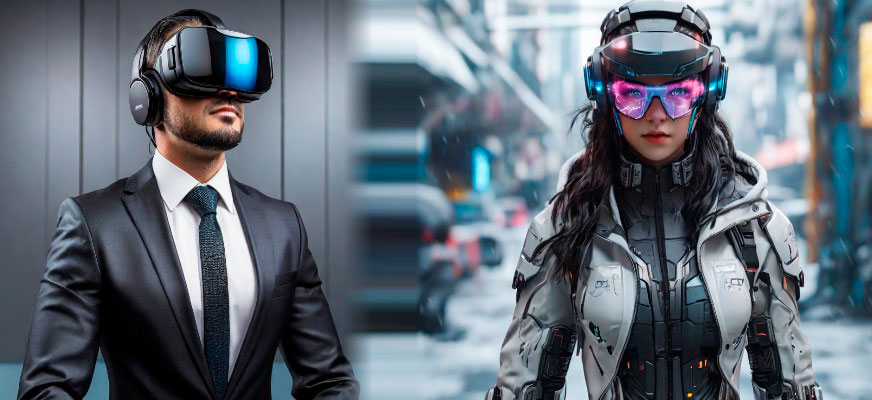
The collaborative potential of XR extends beyond geographical constraints. Teams separated by vast distances can engage in shared virtual spaces, fostering collaboration and innovation. XR-powered meetings and conferences create a sense of presence, allowing participants to interact as if they were physically co-located. As XR becomes an integral part of human experiences, ethical considerations come to the forefront. Issues such as data privacy, digital ethics, and the potential for addiction require careful consideration to ensure that XR technologies are harnessed responsibly and with a focus on the well-being of users.
In conclusion, Extended Reality emerges not just as a technological advancement but as a conduit for transformative human experiences. As XR continues to evolve, it will play a pivotal role in shaping the way we learn, conduct research, and interact with the world around us. The fusion of physical and digital realms heralds a future where the boundaries of what is possible are defined only by the scope of our collective imagination.
Copyright 2022-2026 "IDIKSA" All Rights Reserved by IDIKSA LLP