
IDIKSA is an individualized digital indicator of knowledge, of skills and abilities, which should become a generally accepted and directing tool in a world based on the integration of physical and virtual spaces.


At its core, XR is the seamless merging of virtual and real worlds into one immersive experience that has the potential to revolutionize the way we create, learn, and interact with the world around us. With its ability to bring together the physical and the digital, mixed reality technology is a catalyst for creativity and innovation.
Before we delve deeper into the world of mixed reality technology, let’s first understand what it entails. Mixed reality technology combines elements of virtual reality (VR) and augmented reality (AR), creating a seamless blend of the real and virtual worlds. This allows users to interact with virtual objects in a real-world context, opening up new and exciting possibilities for immersive experiences.
Mixed reality is a concept that is still in its early stages and can be confusing for some. But imagine being able to see a virtual object right in front of you and to interact with it. Mixed reality offers endless opportunities for creativity, design, and entertainment alike.
“Mixed reality is the sweet spot between the best of both worlds – the immersion of VR and the accessibility of AR.”
Mixed reality has transformed the creative process, providing a new platform for artists and designers to unleash their imagination. By blending virtual objects into real-world environments, mixed reality enables creators to break free of the limitations of traditional art forms and explore new possibilities.
With mixed reality technology, designers can create interactive 3D models that can be manipulated and viewed from multiple angles, revealing new details and insights. Artists can create fully immersive digital environments that enable users to step into their art and experience it in a whole new way.
Mixed reality technology has brought a new dimension to storytelling and creativity. It allows us to create immersive experiences that blur the boundaries between the physical and digital worlds, challenging our perceptions and sparking our imaginations.
Whether it’s creating virtual art installations or developing interactive brand experiences, mixed reality offers many exciting possibilities for creators looking to push the boundaries of art and design. By harnessing the power of mixed reality, we open up a world of creativity that was once unimaginable.
The integration of autonomous machinery and robotics is revolutionizing farming practices. From driverless tractors to robotic weeders, these technologies increase efficiency and reduce the labor-intensive nature of traditional farming. This shift not only enhances productivity but also addresses challenges related to labor shortages in agriculture.
Mixed reality technology has broken the barriers of traditional industries and opened up new avenues for creativity and innovation. Let’s explore how mixed reality has impacted different sectors:
Mixed reality has revolutionized the gaming and entertainment industry, offering new ways to engage fans and gamers alike. From virtual reality roller coasters to AR-enhanced live shows, mixed reality technology has taken media consumption to the next level.
Mixed reality has transformed the way we teach and learn, with immersive and interactive experiences opening up new possibilities for educators and students alike. Mixed reality applications have enabled us to explore remote locations, encounter historical figures, and visit distant planets, bringing learning to life.
Mixed reality technology has improved patient care, providing clinicians with better tools for diagnosis, treatment, and surgical procedures. From remote consultations to AR-powered rehabilitation, mixed reality has transformed the healthcare landscape.
Mixed reality has made it easier to visualize and design complex machinery, speeding up the manufacturing process and reducing costs. By overlaying virtual models on top of real-world environments, mixed reality technology has proved to be an invaluable tool for prototyping, testing, and quality control.
Mixed reality has changed the way we shop, allowing us to visualize products in a virtual setting before making a purchase. From virtual try-ons to AR-powered in-store displays, mixed reality is a game-changer for the retail industry.
Mixed reality technology is empowering industries to rethink the way they work and opens up new possibilities for collaboration, innovation, and improving human experiences.
As we continue to explore the limitless possibilities of XR technology, we can see the incredible advancements and trends that are shaping the future of mixed reality
The future of mixed reality will see a significant shift towards more discreet and comfortable wearable devices. As the technology evolves, experts predict a move away from bulky headsets and towards more streamlined, lightweight devices such as AR glasses.
One exciting development in the future of mixed reality technology is the integration of haptic feedback. This feature allows users to feel physical sensations in virtual environments, creating a more immersive experience. From a gentle vibration to simulate touching a surface to a more forceful sensation to simulate an impact, haptic feedback will take mixed reality to a whole new level.
With the advancement of spatial mapping technologies, the future of mixed reality will offer a more seamless and accurate blending of virtual and physical environments. This will enable more sophisticated interactions with virtual objects and enhance the user’s overall experience.
“The future of mixed reality holds endless possibilities for innovation and collaboration, transforming the way we experience the world around us.” We are on the cusp of an exciting era where mixed reality technology will revolutionize the way we work, play, and interact with each other. The future looks bright for XR and we cannot wait to see where it takes us.
While mixed reality offers incredible potential, organizations and individuals looking to adopt this technology must navigate some significant challenges. The following are some key considerations to keep in mind:
Mixed reality technology often requires specialized equipment, such as head-mounted displays and high-powered computers. These requirements can make it difficult and expensive for some organizations or individuals to access the technology.
Mixed reality technology often involves the collection of data, which can raise privacy concerns. Organizations must ensure they have appropriate safeguards in place to protect user data and privacy.
People and organizations looking to adopt mixed reality must undergo extensive training and education to use the technology effectively. This requirement can be time-consuming and costly, depending on the level of expertise needed.
Organizations must consider how mixed reality technology will integrate with their existing systems. Compatibility issues can arise, leading to additional expenses and challenges.
Despite these challenges, organizations and individuals can overcome them by thorough planning and preparation. Investing in adequate training and education while creating a roadmap can help ensure a smooth adoption process, leading to creative and innovative experiences that can benefit both individuals and enterprises.
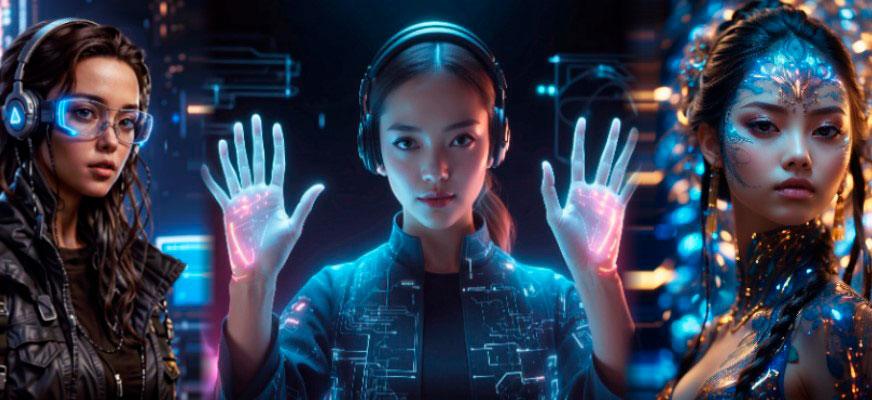
Mixed reality technology has changed the way we collaborate on projects and paved the way for a more innovative future. With the ability to create immersive and interactive experiences, teams can now brainstorm, design, and create together in ways that were previously impossible, breaking down geographical barriers and unlocking new opportunities for collaboration. This fosters innovation, allowing individuals with different backgrounds, expertise, and skills to come together and work towards a common goal, resulting in a more diverse and dynamic team.
One of the key areas where mixed reality has transformed collaboration is in the field of design. Teams can now visualize projects in 3D, allowing for a more tangible representation of ideas. By designing in mixed reality, teams can identify potential design flaws and changes before the physical construction of the project, thus saving on valuable resources and time. Mixed reality-based prototypes can even be tested by users, allowing for immediate feedback and improvements, resulting in a more user-centered design with better outcomes.
Another significant area where mixed reality has transformed collaboration is in the field of education and training. With mixed reality, learners can engage with virtual environments that simulate real-life experiences, making it an ideal tool to train and educate individuals in high-risk or complex scenarios. For instance, medical students can use mixed reality to simulate surgeries, allowing them to practice various procedures without the risk of harming a patient. Pilots can use mixed reality to practice take-offs and landings in simulated scenarios, allowing them to hone their skills before entering a real aircraft. This has not only proven to be an effective training method but has also been proven to increase motivation, interest, and retention rates.
“Mixed reality technology is transforming teamwork and revolutionizing the way teams brainstorm, design, and create together, breaking down geographical barriers and unlocking new possibilities for collaboration.”
One example of how mixed reality is transforming collaboration in architecture is through the use of Microsoft HoloLens. This head-mounted display uses holograms projected into the real world, allowing architects to design in mixed reality and collaborate with clients and colleagues in real-time. HoloLens enables architects to create realistic 3D models of buildings and immerse themselves in virtual environments, providing clients with a more comprehensive understanding of the design. Additionally, HoloLens enables remote-screen sharing, allowing team members to work together on projects regardless of their location, enhancing collaboration and reducing project timelines.
| Benefits | Challenges |
| Enhanced collaboration and teamwork | Cost of equipment and software |
| Reduced project timelines | Limited access to mixed reality designs |
| User-centered design with better outcomes | Training costs for new technology |
As mixed reality technology continues to gain traction, we can expect to see further transformations in the way we collaborate and innovate. By embracing the limitless potential of mixed reality, we can create a more inclusive, diverse, and innovative future.
Mixed reality technology is revolutionizing how we experience art, design, and architecture. Let’s examine some compelling examples where XR has been used to create unforgettable mixed reality experiences.
The Infinity Room, created by renowned artist Yayoi Kusama, is a prime example of how mixed reality technology can enhance traditional art forms. The installation merges physical space with virtual reality, creating an infinitely mirrored room that surrounds visitors with mesmerizing lights and sounds. Similarly, The Virtual Depictions of San Francisco by Refik Anadol transcends traditional art forms by projecting layers of data onto the city skyline, creating a stunning interactive experience.
Mixed reality technology is also being used to revolutionize the architecture industry. The Hololens BIM app by Trimble allows architects to view and manipulate 3D models of buildings in real-time, creating a dynamic and immersive design experience. Additionally, the Mixed Reality Sandbox by the University of California, Davis, provides a hands-on approach to architecture and urban planning. The sandbox allows users to create topographical designs and see how those designs would impact the surrounding environment.
Mixed reality technology is transforming the entertainment industry, creating immersive and interactive experiences for audiences. The VOID, a mixed reality theme park, offers an array of experiences where visitors can take part in their favorite fictional universes. The park uses a combination of VR and AR to create a fully immersive environment where guests can physically interact with their surroundings.
These examples only scratch the surface of the transformative power of mixed reality technology. The possibilities are endless, and we’re excited to see how it will continue to impact different industries in the future!
– Mixed reality technologies blend virtual and real worlds seamlessly.
– Mixed reality technology revolutionizes the way we create, learn, and interact with the world around us.
– Mixed reality technology is a catalyst for creativity and innovation.
– Mixed reality technology brings together the physical and digital worlds.
– XR is the future of technology that holds endless potential for enhancing our experiences.
As we conclude our exploration of mixed reality technologies, we can’t help but feel excited about the endless possibilities it presents. XR technology has the power to revolutionize the way we create, collaborate, and consume media, and its potential is only just beginning to be realized.
With the exponential growth we’ve seen in XR technology, it’s safe to say that the future is bright for mixed reality. From enhancing learning experiences to improving patient care, XR technology has the potential to solve some of the world’s most pressing problems.
At the same time, we must also recognize that there are challenges and considerations to navigate when adopting mixed reality. It’s essential to approach this technology mindfully, with a clear understanding of its limitations and the ways in which we can address them.
But as we look to the future, we’re excited to be a part of the XR revolution and to embrace the limitless potential it offers. Join us as we explore the frontiers of XR technology and create a better future for all with mixed reality.
Copyright 2022-2026 "IDIKSA" All Rights Reserved by IDIKSA LLP